TL;DR
Sell on Amazon without storing products using dropshipping, print-on-demand, or digital products.
List products, and suppliers, or Amazon handles storage, printing, and shipping for you.
Earn passive income through KDP, affiliate marketing, or selling digital downloads.
Retail arbitrage lets you buy discounted products and use third-party fulfillment.
No upfront inventory costs, making it a low-risk way to start an Amazon business.
Success depends on finding the right niche, optimizing listings, and marketing effectively.
Want to sell on Amazon but don’t want to handle inventory or storage? You don’t have to!
Many sellers believe they need to stock products, manage warehouses, and handle shipping, but that’s not true. Amazon offers multiple ways to make money without holding products, making it easy to start a business with low cost and zero stock management.
If you’re looking for a low-risk, easy way to sell online, this is for you!
In this guide, we’ll explore six proven methods to sell on Amazon without inventory. Whether you’re looking for passive income, a low-risk business model, or a way to start with minimal investment, these options can help you succeed.
How does inventory-free selling work on Amazon?
Selling on Amazon without inventory means you don’t need to keep products in stock, handle storage, or manage shipping. Instead, you can use Amazon’s services to sell products in different ways without owning physical stock.
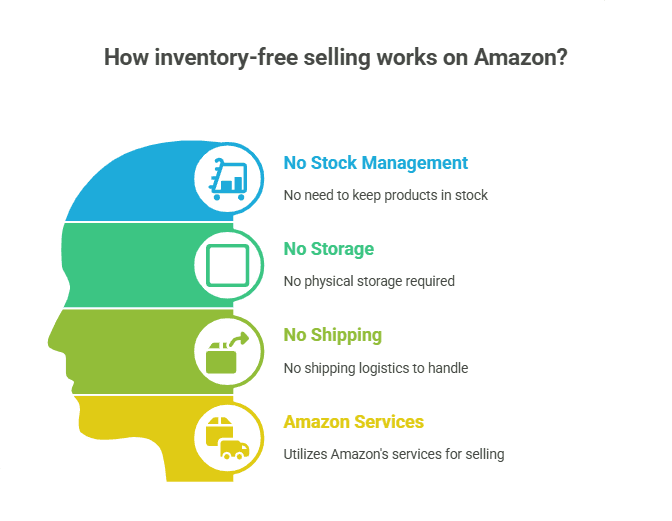
Here you can find some popular methods:
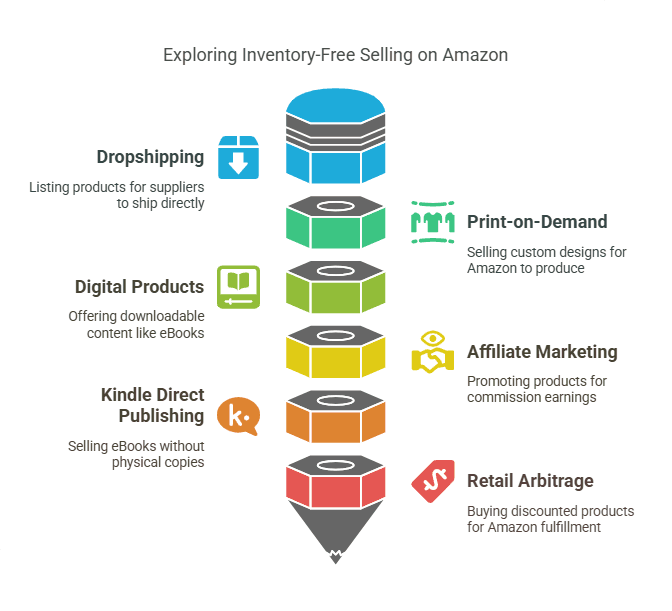
Dropshipping – You list products on Amazon, and when a customer orders, a supplier ships it directly to them.
Print-on-demand – You sell custom designs on t-shirts, mugs, or books, and Amazon prints and ships them after each sale.
Digital products – You sell eBooks, audiobooks, or online courses, which customers can download instantly.
Affiliate marketing – You promote products from Amazon and earn a commission for every sale.
Kindle Direct Publishing (KDP) – You can sell eBooks on Amazon without printing or storing them.
Retail arbitrage with third-party fulfillment – Buy discounted products and send them to a fulfillment center instead of storing them at home.
6 ways you can sell on Amazon without inventory
#1: Amazon Dropshipping
Dropshipping allows you to sell products on Amazon without ever stocking them. Instead of keeping inventory, you list products from a supplier. When a customer places an order, you buy the product from the supplier, and they ship it directly to the customer. This means you never have to handle or store the items yourself.
But it is important for you to optimize your product listing for Amazon so that when customers search for related products, your listing appears in the search results, increasing the chances of a purchase.
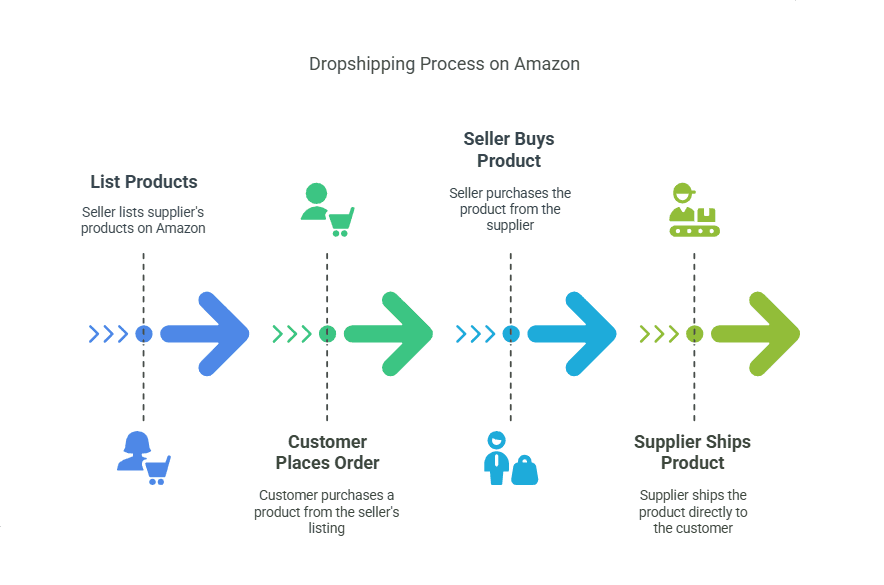
Step-by-step process:
First you need to find a supplier who offers dropshipping services ( like AliExpress, SaleHoo, or CJ Dropshipping).
List the supplier’s products on Amazon at a marked-up price.
When a customer orders, purchase the product from your supplier.
The supplier ships the product directly to the customer.
You keep the profit difference between your selling price and the supplier’s price.
Pros:
No need to buy inventory upfront, reducing financial risk.
Wide variety of products to choose from.
Low startup costs compared to traditional eCommerce.
Cons:
Profit margins are lower due to supplier fees and shipping costs.
Amazon has strict dropshipping rules, and violating them can lead to account suspension.
Customer service can be tricky if there are shipping delays or quality issues.
Practical example:
You decided to start an online business, but don't want to handle products. You can find a supplier selling phone accessories and list them on Amazon. A customer orders a phone case for $20. Then, you buy it from the supplier for $10, who then ships it directly to the customer. That way, you can make a $10 profit without storing the product.
Pro tip: To succeed with dropshipping on Amazon, you always work with reliable suppliers who provide fast shipping and quality products to avoid negative reviews and customer complaints.
#2: Amazon Merch-on-Demand
How it works:
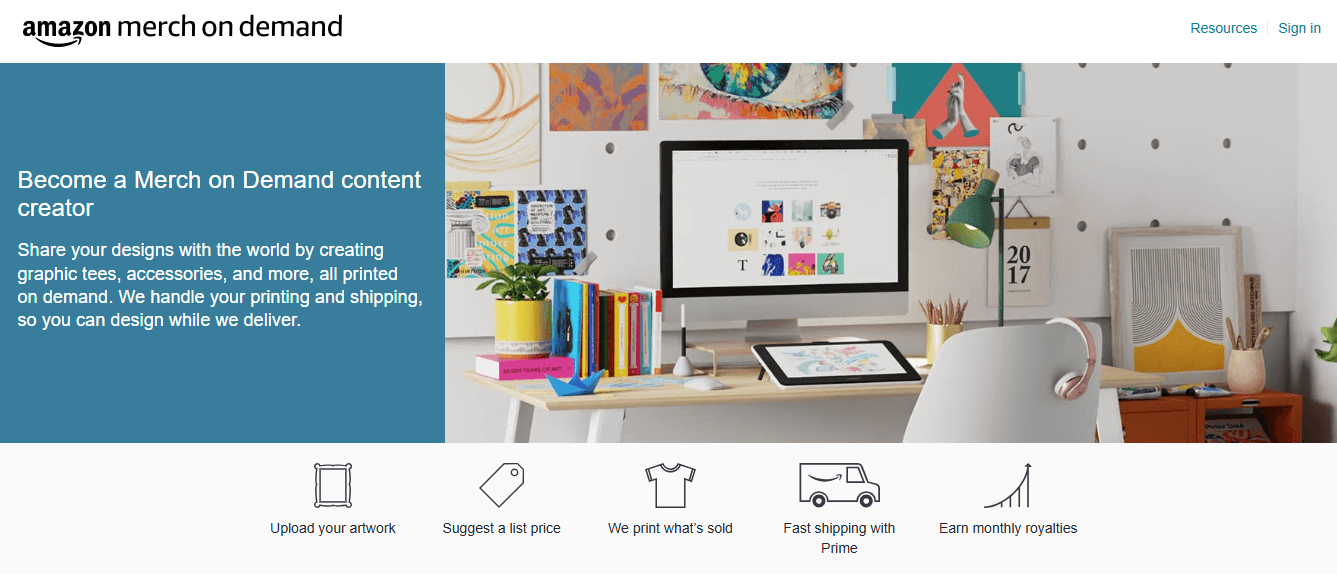
Amazon merch-on-demand allows you to sell custom-designed clothing and accessories without handling inventory. You upload your designs, and Amazon prints, packs, and ships the items when customers place an order. You earn a royalty for each sale.
Step-by-step process:
Apply for an account on Amazon Merch by Demand.
Create and upload unique designs for t-shirts, hoodies, phone cases, and more.
Set your prices and list your products on Amazon.
When a customer places an order, Amazon prints and ships the item.
You earn a royalty from each sale without worrying about production or shipping.
Pros:
No inventory or upfront costs, making it risk-free.
Earn passive income as designs sell over time.
Amazon handles everything from printing to customer service.
Cons:
High competition in popular niches.
Requires design skills or hiring a designer.
Amazon decides the royalty percentage based on product pricing.
Example:
If you love creating digital art. Then you can upload your funny slogan t-shirt designs to Amazon merch-on-demand. A customer orders a t-shirt, Amazon prints and ships it, from the digital art you created, and you earn a royalty without handling any inventory or packaging.
Pro tip:
To succeed in merch-on-demand, focus on creating unique and trending designs. For that, use keyword research for Amazon products to find popular search terms or themes that customers are searching for on Amazon.
#3: Amazon Kindle Direct Publishing (KDP)
How it works:
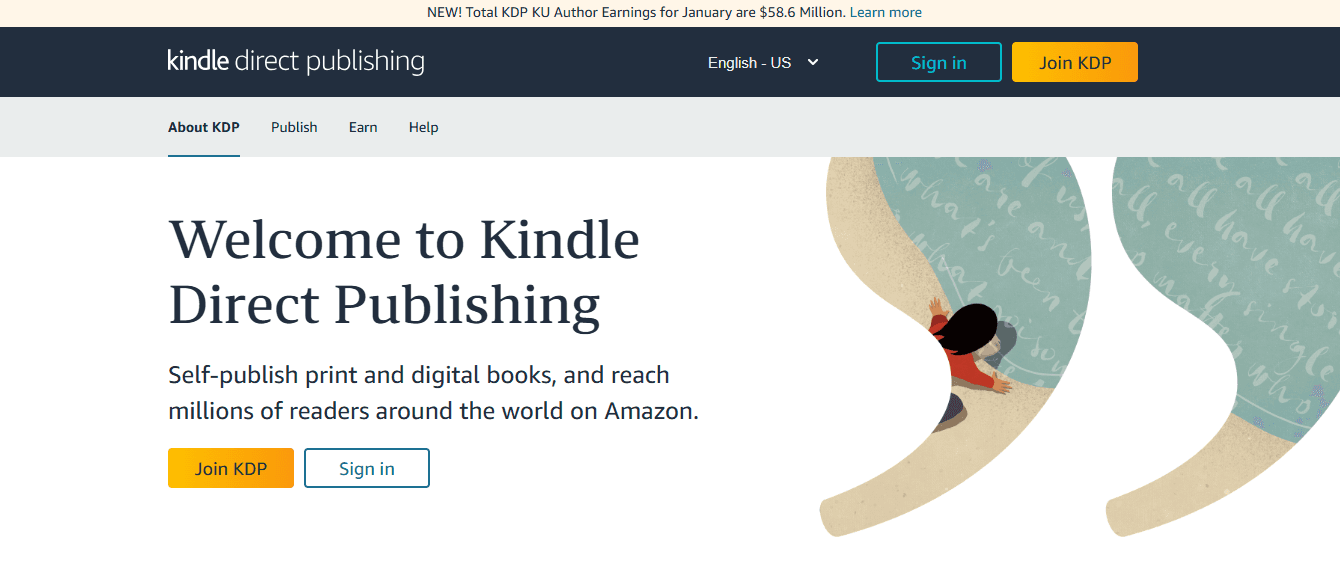
Amazon Kindle Direct Publishing (KDP) lets you publish and sell eBooks and paperbacks without handling inventory. When a customer buys your book, Amazon either delivers the digital copy instantly or prints and ships a paperback on demand. This means you don’t have to worry about printing costs, storage, or shipping.
Step-by-step process:
Write or hire a writer to create your book.
Format your book and design an eye-catching cover.
Upload your book to Amazon KDP and set the price.
List your book in relevant categories to improve visibility.
Customers purchase your book, and Amazon handles the delivery.
You earn royalties from each sale.
Pros:
No printing, storage, or shipping required.
Passive income as books sell over time.
Global reach through Amazon’s marketplace.
Cons:
Writing or outsourcing a book takes time.
Marketing is needed to attract buyers.
High competition in popular book categories.
Example:
If you like writing and are passionate about personal finance, write a beginner’s guide on budgeting. Then you need to upload this eBook to Amazon KDP, setting the price at $9.99. When a customer buys it, Amazon delivers the digital copy. Later, another customer prefers a physical version, so Amazon prints and ships the paperback. In this process, you earn royalties on both sales without handling anything yourself.
Pro tip:
To boost sales, use Amazon ads and promote your book on social media. Also, optimize your book’s title and description with relevant keywords to help it rank higher in searches.
#4: Amazon affiliate marketing
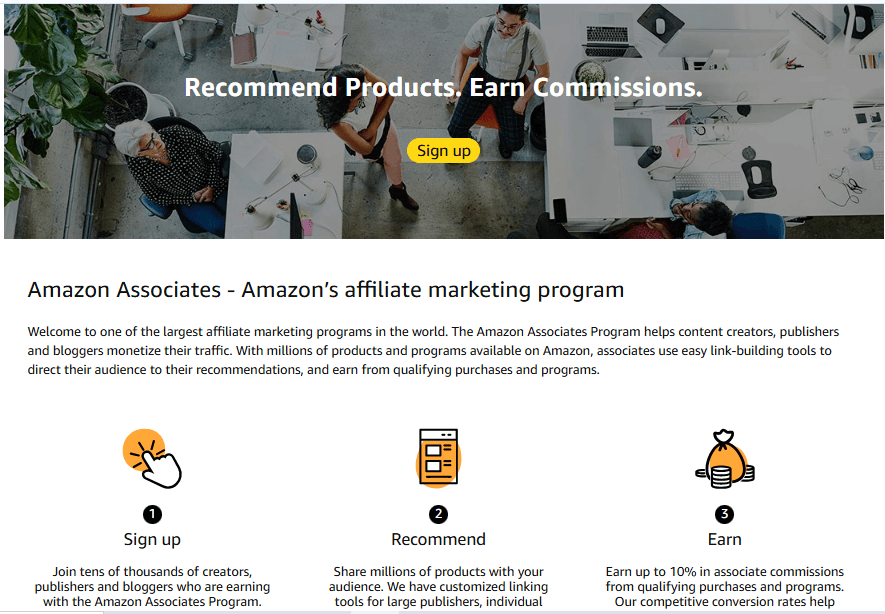
Amazon’s Affiliate Program, also known as Amazon Associates, allows you to earn commissions by promoting products sold on Amazon. Instead of selling your own products, you recommend existing products and get paid when people buy through your special referral link.
Step-by-step process:
Sign up for Amazon Associates and get approved.
Choose Amazon products related to your niche, like tech, home decor, and fitness.
Share your unique affiliate links through a blog, YouTube channel, social media, or email list.
When someone clicks your link and makes a purchase, you earn a commission.
Pros:
No need to create or store products.
It can be a passive income stream if you have steady traffic.
Works well for bloggers, influencers, and social media marketers.
Cons:
Requires consistent traffic and marketing efforts.
Commissions are relatively low compared to selling your own products.
Amazon changes commission rates, which can affect earnings.
Example:
Imagine a home decor blogger who reviews furniture and decorations. They write about the best Amazon home decor finds and include affiliate links. When their readers purchase products through these links, they earn commissions without managing inventory or shipping.
Pro tip:
To succeed with Amazon affiliate marketing, focus on building a niche audience and creating valuable content. Product reviews, comparison guides, and gift lists are great ways to drive affiliate sales.
#5: Amazon retail arbitrage with third-party fulfillment
Retail arbitrage involves finding discounted products in retail stores and reselling them on Amazon at a higher price. Instead of storing the products at home, sellers can use third-party fulfillment centers to manage storage and shipping.
Step-by-step process:
Visit local stores like Walmart, Target, or clearance sales to find discounted products.
Purchase the items and list them on Amazon at a profitable price.
Ship the products to a third-party fulfillment center instead of keeping them at home.
When a customer orders, the fulfillment center packs and ships the product.
You earn the price difference between your cost and the selling price, minus fees.
Pros:
No need to store products at home.
Can find high-profit items with the right strategy.
Less work in handling shipping and returns.
Cons:
It takes time to find profitable deals.
Third-party fulfillment fees reduce overall profits.
Prices on Amazon can fluctuate, affecting margins.
Example:
For example, you can find branded toys on clearance at a store for $10 each, buy 50 units, and send them to a fulfillment center. You then list them on Amazon for $25 each. When a customer buys, the fulfillment center ships the product for you, so you make a profit without storing or packing anything yourself.
Pro tip:
To succeed with retail arbitrage, use Amazon seller apps to scan products in stores and check their selling price, demand, and profit potential before purchasing. For that, you can choose an Amazon account audit for comprehensive market research to identify opportunities.
6. Selling digital products on Amazon
Selling digital products on Amazon allows you to earn money without handling physical inventory. Digital products can include ebooks, templates, printables, online courses, music, or software. Once uploaded, customers can purchase and download them instantly, making this a great way to earn passive income.
Step-by-step process:
Decide what type of digital product you want to sell, like planners, stock photos,or courses.
Create high-quality content using tools like Canva, Adobe Illustrator, or Microsoft Word.
Format your digital product to be easy to use and downloadable.
Upload your product to Amazon KDP (for ebooks) or Amazon digital services.
Set a competitive price and write a compelling product description.
Promote your product using social media, email marketing, or Amazon ads.
Customers purchase and download your product, and you earn revenue without further effort.
Pros:
No storage, shipping, or production costs.
High profit margins since there are no ongoing expenses.
Can generate passive income over time.
Once created, products can be sold unlimited times.
Cons:
Requires skills in content creation, design, or writing.
Competitive market, so marketing is necessary to stand out.
Some categories, such as eBooks have strict Amazon guidelines.
Example:
A graphic designer creates printable meal planners and lists them on Amazon as digital downloads. Customers purchase, download, and print them at home. The seller earns money from each sale without handling inventory or shipping.
Pro tip:
To maximize sales, create unique, high-quality digital products and optimize your product listings with the right keywords and engaging images. Also, bundle multiple digital products together for added value and higher sales.
Wrap up
Selling on Amazon without inventory is a great way to start or expand an online business with low investment. Whether you choose dropshipping, print -on-demand, KDP, affiliate marketing, retail arbitrage, or digital products, each method offers unique benefits.
If you’re unsure where to start or need guidance, our team of Amazon consultants provides expert advice on Amazon selling strategies, optimization, and scaling your business for success.
Get in touch with us today and take your Amazon business to the next level!